Sunday, December 4, 2011

Wednesday, November 16, 2011
Graduate School Research: Rhode Island School of Design
I am interested in RISD because I like the idea of their loose graduate level structure. They focus on individual study and research, unlike their undergraduate program which is more structured. They define photography "broadly as an ever-changing set of technical, conceptual, and aesthetic conditions that have emerged from the histories of the medium and that exist within broader social, cultural, and aesthetic contexts."
In comparison with the School of Visual Arts, the SVA seems to focus on a rigorous structured program, different from the independent research driven program that RISD has.
Faculty: Michael Bühler-Rose
Visiting Assistant Professor of Photography
MFA, University of Florida
BFA, School of the Museum of Fine Arts, Boston


Alumni: Brandon Herman
Born Hillsborough, CA 1983
Education: B.F.A. Rhode Island School of Design
Lives and works in Los Angeles, CA.

UNTITLED (chicago alley) 2004 c-print 44×55 inches edition of 3

UNTITLED (ian against wall) 2005 c-print 30×45 inches edition of 3
Tuesday, November 15, 2011
Idea Entry #10: Framing

Framing is something that has been really important in my project so far. Like the quote says below, framing eliminates what is not essential to the final image. I am using framing to take away everything except for the minimum amount of information needed to give the viewer a chance to place themselves somewhere.
“The human eye is less accustomed to vertical framing, because it has to scan it from top to bottom. This will lead the eye to not pay much attention to elements placed on the borders of the frame. So, vertical framing is used less than horizontal framing and is more appropriate for shooting portraits, architecture, and scenes where vertical lines play a predominant role in defining them.”
"The Importance of Framing in Photography." Digital Photography Tips, Photography Blog - Photopoly. Web. 15 Nov. 2011. <http://www.photopoly.net/the-importance-of-framing-in-photography/>.
“The process of framing is intended to eliminate what is unessential in the motion picture, to direct the spectator’s attention to what is important, and to give it special meaning and force. Each frame of film, which corresponds in shape to the image projected on the screen, forms the basis for a graphic composition in the same way that the frame of a painting encloses the area in which the painting must be organized.”
"Motion Picture :: Framing -- Britannica Online Encyclopedia." Encyclopedia - Britannica Online Encyclopedia. Web. 15 Nov. 2011. <http://www.britannica.com/EBchecked/topic/394107/motion-picture/52241/Framing?anchor=ref508567>.
Plastic Cameras: Toying with Creativity:
This book discusses plastic cameras and various techniques and the history behind them. When I think of unique framing, the Holga and Diana F+ cameras are the first things that come to mind. The author gives various tips and suggestions for coming up with some creative uses for the cameras.
Bates, Michelle. Plastic Cameras: Toying with Creativity. Burlington, MA: Focal, 2007. Print.
Monday, November 14, 2011
Graduate School Research: School of Visual Arts
I am interested in the School of Visual Arts for a few reasons; first I am interested in it because of it's location. Located in the heart of New York City, it is in the middle of a huge mecca for arts and that alone is a huge advantage. I would like to relocate to NYC at some point for a little while; second it has 19 graduate programs, several of which I am interested in, but for the purposes of this entry I am going to focus on their MPS in Digital Photography.
I know a friend who is attending SVA for his Undergrad studies and he really has had a great experience there. While I was in NYC I went to one of their Graduate exhibitions. The gallery was located in Chelsea, right near the High Line. Perfect location in the middle of all of the upscale art galleries there. All of the work presented was excellent and I really enjoyed seeing the difference in the work between VCU Graduates and SVA graduates.
The MPS in Digital Photography really places a great importance in technical skills. Graduates from the program are often hired at some of the best studios and labs around. "The program benefits greatly from both its outstanding faculty and its location in the heart of the photo district in New York City. Our instructors are working professionals with extensive expertise in professional photography and digital-imaging technologies. In addition, a variety of guest lecturers from the industry complement the core faculty to further enrich each student's learning experience."
Graduate Student Profile: Yulia Gorbachenko
Bio:
"Fashion and Beauty Photographer | New York City
I am very much intrigued in the unpredictable results obtained from the experiment between a subject and myself. The discovery of a model’s charisma, mood, and emotion at the exact moment the shutter clicks is what makes “fashion imagery” more than a mere shot. No outlined storyboard or plan is needed. Staying within preset lines causes the magic of that connection to be lost. Yes, I do start with a concept in my head but once I’m on set I just let the energy guide my subject and I through the creation of each image.
Color, flare, and beauty are my addictions. My heart serves as guide – it never fails. My inspiration is unpredictable but its beauty precise. I see it, touch it, feel it, smell it; I find it everywhere.
All of my images capture the unique and irreplaceable beauty of a model’s essence – nothing else is enough to please my demand for utmost expression.
My desire to reach perfection is an obsession. It’s an insane illusion that will never happen but it fuels my Art.
EDUCATION:
School of Visual Arts Master’s Degree in Digital Photography
New York, NY
Kyiv National University of Trade and Economics Bachelor’s Degrees in Marketing and Linguistics


Faculty Profile: Andy Batt
Bio: Professional photographer Andy Batt creates moving images for editorial, advertising, interactive and corporate clients. His work is high energy, capturing the speed, beauty and grace of his subjects. He is known for his dramatic sports photos and his portraits of interesting people. Andy has been a panelist for Canon Cameras, APA San Francisco, and is now an adjunct professor for the School of Visual Arts' Digital Masters of Photography program. His photography has been featured by the Annenberg Space for Photography, PhotoEidolo Magazine, Foto & Video Magazine/Russia, Avante Garde Living Magazine/Hyderabaad, India, and recognized by Outside Magazine as one of their top 10 published images. Hannah McCaughey, Creative Director at Outside Magazine said: "This photo makes me want to run and run and run, and then go to Jenn’s house afterward to hang out. It was also Andy’s first shoot for us, and he did impress!"


Artist Entry #10: Sze Tsung Leong
Brian Ulrich told me about this artist's series Horizons. I've been trying to pay attention to how I am framing the images I am taking for this project, specifically how I am using the horizon line to my advantage. I like the idea of just providing enough information to give the viewer a place they can connect with mentally. Tsung Leong said that he feels that his images in the series are pieces that can be rearranged, and the viewer can fill the empty spaces with their own horizons. Pretty awesome if you ask me.
"It is this relationship to the outside that gives the horizon an additional implication: that it establishes a sense of imminence, or
of something just becoming apparent, as suggested by the phrase “on the horizon.” What is not yet seen or not yet known
always surrounds and encroaches into the visible or known, and permeates thinking about and looking at our extended surroundings. The challenge that the unknown presents can drive the wish to solidify or reinforce borders, to build walls. But the interest and curiosity that the unknown also elicits can drive the wish to draw new maps, to roam unseen territories, to observe the
seemingly empty regions of space. This drive is an impulse to approach the unknown, that is, to drift towards the horizon."
"These images were not made as documents holding any set truths. They are meant only as suggestions. They are not necessarily images of moments, events, or objects. They are incomplete fragments of the globe. Their order can be rearranged—they
are not without a degree of arbitrariness. They are emptied, to whatever degree is possible or impossible, of specific meanings,
sometimes as physically empty as possible. They are attempts to depict space on the surface of the photograph, spaces into
which viewers can project their own horizons."
Tsung Leong, Sze. "Uncertain Distances." Szetsungleong.com. Web. 14 Nov. 2011. .


No image information is available.
Link to his essay "Uncertain Distances": http://www.szetsungleong.com/Leong_Uncertain_Distances.pdf
Gallery Representation: http://www.yossimilo.com/artists/sze_tsun_leon/
Wednesday, November 9, 2011
Idea Entry #9: Sublime
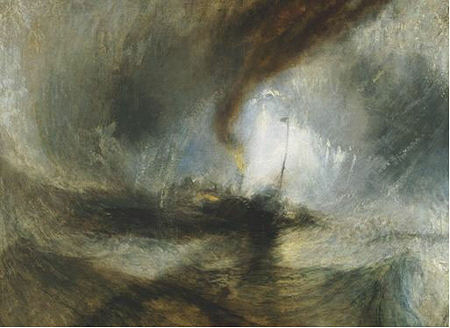
While doing some research for the presentations next week on awe, I came across Edmund Burke's treatise on aesthetics, in which he stated that the sublime and the beautiful were mutually exclusive. Sublime was mentioned quite frequently with awe, so I was curious to do some research on it.
From dictionary.com:
sublime (səˈblaɪm) ![[Click for IPA pronunciation guide]](https://lh3.googleusercontent.com/blogger_img_proxy/AEn0k_v2p4L-6uGd6e92FWUBPUVEDsCwCsVMwpyo-ANuMYlpmu7g55hW3r3-pwIBDdfJQ-cOkF7lBS0j7i8X_25nGQ4n1Voyb0SCKcXsVy7EGiSbPoD_fycCwAg8Eqdvmgm2xvm0NCJf8eHk4pQmO7d0gx1P=s0-d) | |
| —adj | |
| 1. | of high moral, aesthetic, intellectual, or spiritual value;noble; exalted |
| 2. | inspiring deep veneration, awe, or uplifting emotion becauseof its beauty, nobility, grandeur, or immensity |
| 3. | unparalleled; supreme: a sublime compliment |
| 4. | poetic of proud bearing or aspect |
| 5. | archaic raised up |
“I know several who admire and love painting, and yet who regard the objects of their admiration in that art with coolness enough in comparison of that warmth with which they are animated by affecting pieces of poetry or rhetoric.”
“It is our ignorance of things that causes all our admiration, and chiefly excites our passions.” Burke “On the Sublime and Beautiful” part 2: 5
“There is something so over-ruling in whatever inspires us with awe, in all things which belongs ever so remotely to terror, that nothing else can stand in their presence.” “On the Sublime and Beautiful” part 4: 24
Burke, Edmund. A Philosophical Enquiry into the Origin of Our Ideas of the Sublime and Beautiful. London: Routledge and Paul, 1958. Print.


Monday, November 7, 2011
Lecture Questions/Response: Fionn Meade
1. When you are writing about the shows you have curated, how important is it for you to really have a relationship with the artist's whose work you're including in the show?
2. As a curator, how do you find a balance between the various elements of a group show or collection? Do you prefer to find a particular theme to go by? Or do you let the work inform the overall idea behind a collection?
Response:
To be honest, this lecture was very odd for me. For starters, it was different hearing the thoughts of a curator and writer, but I also found that I had a bit of trouble accessing what he was saying. He introduced a lot of information and thought into a short amount of time, and often the transition between topics was a bit off. There was one moment when he talked about Franz Boas that I connected with, having just talked about him in my anthropology class recently. It was interesting hearing about him from an arts perspective rather than an anthropological one. Meade talked about how Boas took a secret image (of the Hamatsa ritual) and put it forward as a representative image. The image was blown up into this huge deal, and was appropriated well beyond the intended reasons.
Something else that was very interesting was the statement Meade opened up with. He said that the image was an "object or container of belief". Meade also questioned what came after images, and what remains after you close your eyes. He also touched on appropriation and montage.
3 words:
appropriation
montage
object
Sunday, November 6, 2011
Artist Entry #9: Troy Paiva
I have chosen to write about Troy Paiva because the work that he produces is relevant to what I am trying to work towards now. He does a lot of long exposure work at night and really focuses on using the available light to create his stunning images. He does use some of his own hand to paint in some of the details in his images. His work focuses on the urban exploration culture and the exploration and expansion westward.
"The photography of Troy Paiva treats us to canted visions of a crumbling, post-industrial America — decommissioned military bases, aircraft ‘boneyards’, abandoned desert towns. The scenarios are all shot at night and the work is presented straight out of the camera, mostly untouched by Photoshopping or other post-processing techniques. Troy uses available light, such as moonlight or sodium light (the latter of course plentiful in the modern-day archaeological ruins he haunts), but he also uniquely marks the shots with his light-painting skills (the introduction of hand-held, hand-applied light during the exposure) and the unearthly effects of red, green and blue-gelled strobe flashes. "
"Ballardian » The Light-Painter of Mojave D: An Interview with Troy Paiva."Ballardian. Web. 06 Nov. 2011. .
"The atmosphere. The sense of isolation and loneliness. I love the surreal feeling of wandering through an abandoned subdivision, alone, in the middle of nowhere, in the middle of the night. Your senses become heightened and you feel the weight of time. Not spooky hollywood ghosts, but ghosts none the less. I try to bring all these sensations and emotions forth in my photography."
"Mental_floss Blog » Nighthawks Behind the Lens: Interview with Troy Paiva."Mental_floss Magazine - Where Knowledge Junkies Get Their Fix. Web. 06 Nov. 2011. .


 No image information available.
Wednesday, November 2, 2011
Idea Entry #8: Skyglow
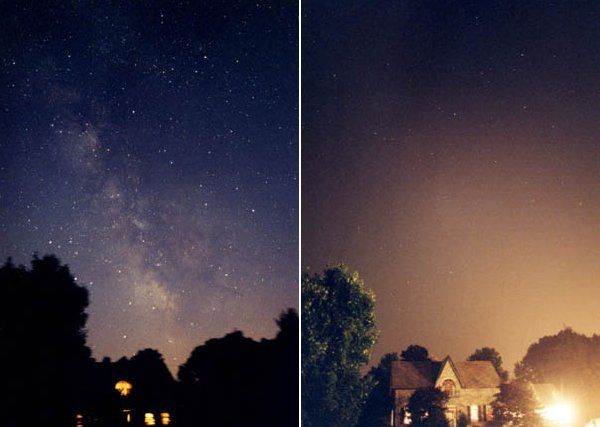
While looking at the work I showed at mid-crit on Monday I was asking myself what I was interested in with the images I had. After looking and thinking, I decided that I was interested in the skies, the reflections in the water, the horizons. I was not interested particularly in the specific location's role in the image, and I have decided that I really don't want to go the direction of manipulation. So I decided to look into light pollution, and while googling it, came across the term "skyglow". So here is this week's idea blog.
"What Is Sky Glow? | Light Pollution | Lighting Answers | NLPIP." Lighting Research Center | University-based Research and Education Organization Devoted to Lighting. Web. 02 Nov. 2011. .
"Urban Sky Glow is a problem that used to be limited to big metropolitan areas. But today, the problem has reached epidemic proportions. There are only a very few truly dark areas left on the east coast. Certainly here in Northern Virginia the sky is full of misdirected light. And the problem has worsened significantly over the past 5 years. Growth in our area and increased competition between business and even between the new breed of "super neighborhoods" have led to the rapid degradation of the night sky."
"Skyglow." Virginia Outdoor Lighting Taskforce - VOLT. Web. 02 Nov. 2011. .
"Sky-glow conscious lighting design" NE Pollard
"As society becomes more environmentally conscious the problems of obtrusive light, and particularly 'sky glow', have led many road lighting engineers to demand full cut-off luminaires emitting no light whatsoever above the horizontal. This paper looks at the range of existing fixed-angle exterior luminaires and suggests a classification for them which accommodates the wide variety of designs and requirements for the aesthetic appearance and need for light on some high vertical surfaces. The brightness of floodlit buildings is also discussed as a growing number of people feel that luminance, not illuminance should be the design criterion for helping to reduce the many over-bright installations that are also causing unnecessary light pollution."
Pollard, NE. "Sky-glow Conscious Lighting Design†." Lighting Research and Technology. Web. 02 Nov. 2011.
Sunday, October 30, 2011
Artist Entry #8: Florian Maier-Aichen
Last week during my meeting with Tom, he suggested that I watch an Art 21 video featuring Florian, the video was titled "Fantasy". After I watched the video, I was really inspired to try and do some manipulation of my own to some of the images I had taken in DC that weekend previous and shown to Tom. Right now I am more focused on keeping the changes subtle, so that they don't overpower the image or make it too ridiculous, but I do like the idea of going that far and really making some wacky stuff. I am also digitally painting instead of compositing together elements from multiple images into one.
"Florian Maier-Aichen’s images reinterpret landscape photography for the 21st century. Often shot at obscure angles or from aerial views, his estranged vantage points are both alien and familiar; a sensation enhanced by his subtle manipulation of the images. Conceiving the representation of sites with a sense of dislocation, Maier-Aichen’s work addresses issues of globalisation and virtual perception. In Untitled, Maier-Aichen’s coastline is far from postcard perfect: a virgin beach lined with superhighway and luxury homes expanding into the misty distance. Tinting the surrounding forest in an unnatural shade of red, he casts an apocalyptic glow over the seascape, framing wilderness and human intervention as a scene of science fiction portent." -from Saatchi Gallery
"Alternately romantic, cerebral, and unearthly, Florian Maier-Aichen’s digitally altered photographs are closer to the realm of drawing and fiction than documentation. He embraces difficult techniques, chooses equipment that produces accidents such as light leaks and double exposures, and uses computer enhancements to introduce imperfections and illogical elements into images that paradoxically “feel” visually right, though they are factually wrong."
"Florian Maier-Aichen: Rejecting Tradition." Art21 Blog. Web. 30 Oct. 2011.
<http://blog.art21.org/2010/07/09/florian-maier aichen-rejecting-tradition/>.
"Might certain contemporary photographers be over-emphasizing our adherence to photographic truth in order to make their supposed transgression of it worthy of our attention? Probably, but Maier-Aichen isn’t one of them. Somewhat hilariously, he builds labour into his image-making process where none need exist. "
"Frieze Magazine | Archive | Archive | Florian Maier-Aichen." Frieze. Web. 30 Oct. 2011. <http://www.frieze.com/issue/review/florian_maier_aichen/>.

Florian Maier-Aichen
Der Watzmann
2009
C-print
86 3/4 x 62 1/4 inches
Der Watzmann
2009
C-print
86 3/4 x 62 1/4 inches

Florian Maier-Aichen
Untitled
2005
c print
54 x 42 1/4 inches

Florian Maier-Aichen
Chamonix - Rue Nationale et le Mont Blanc 2007
c-print
24 3/4 x 31 1/2 inches
framed edition of 6

Florian Maier-Aichen
The Best General View
2007
c-print
84 x 70 1/4 inches
Link to a video: http://blog.art21.org/2010/07/09/florian-maier-aichen-rejecting-tradition/
Gallery Representation: http://www.saatchi-gallery.co.uk/artists/florian_maier_aichen.htm
Artist does not have a site.
Images from 303 Gallery
Wednesday, October 26, 2011
Idea Entry #7: Manipulation

After watching the episode of Art 21 on Florian Maier-Aichen that was suggested to me, I became interested in the idea of photo manipulation. Aichen would manipulate his photos digitally, changing elements that he did not like, even going so far as adding in things that were not in the image beforehand. It got me thinking about how I could really bring my own vision to the images I am creating, especially after my meeting where I expressed concern with people not liking my images because of where they were taken.
“A new concept in urban design and landscape literature emphasizes how façade treatment can create a more attractive and friendly pedestrian environment. To illustrate this idea and to engage the residents with this concept, the team used photo-manipulation to demonstrate the visual impact of incorporating ground-floor retail into a blank parking ramp. The team selected photographic images of parking ramps and commercial storefronts and used cut and paste functions to combine them. To make the combination more realistic, they used the drawing tools of the software program to blur lines and colors so that the result appeared to be one original image. Some of the storefronts that the team selected were from local stores that had Mexican art in the façade design. The resulting images helped to demonstrate how using space creatively, such as using the parking ramp as a retail store, could reinforce cultural identity in the streetscape of the neighborhood.”
“Our experience suggests that photo-manipulation is most helpful in cases where the design issues have already been defined, since the image library must be prepared ahead of time. In the advanced workshops in the Pilsen project, the participants had already brainstormed and identified problems when the photo-manipulation technique was introduced. The photographic images facilitated more precise design decisions. Instead of showing various pictures of different styles of benches, the team could show exactly what the benches would look like when actually located along a particular street. The participants could evaluate how well they blended with the existing streetscape. This kind of realism, which included vivid colors, seemed to stimulate excitement and commentary. It proved to be a very helpful tool in explaining new designs and eliciting responses.”
(63), In Scopus. "ScienceDirect - Landscape and Urban Planning : Using Visualization Techniques for Enhancing Public Participation in Planning and Design: Process, Implementation, and Evaluation." ScienceDirect - Home. Web. 26 Oct. 2011. <http://www.sciencedirect.com/science/article/pii/S0169204699000249>.
Susan Sontag's On Photography deals with the state of photography and how it has changed throughout its short history. She discusses a variety of issues, from photo manipulation to appropriation, photographs as evidence, etc. She talks of how photography has become a commonplace thing, not the exclusive hobby that it was first starting out. People collect photographs, they are printed, re printed, over and over again. People collect them as trophies, memories of trips.
"Photographs, which fiddle with the scale of the world, themselves get reduced, blown up, cropped, retouched, doctored, tricked out. They age, plagued by the usual ills of paper objects; they disappear; they become valuable, and get bought and sold; they are reproduced. Photographs, which package the world, seem to invite packaging. They are stuck in albums, framed and set on tables, tacked on walls, projected as slides. Newspapers and magazines feature them; cops alphabetize them; museums exhibit them; publishers compile them.
Sontag, Susan. On Photography. New York: Farrar, Straus and Giroux, 1977. Print.
Tuesday, October 25, 2011
Visual response to Art 21 video


After watching the Art 21 video, I decided to try to experiment with some digital painting. Broke out the tablet, got it all set up, and this is what I have so far. Right now I am focusing on bringing out bits of the existing image, and messing with the sky.
Monday, October 24, 2011
Lecture Questions/Response: Nnenna Okore
1. Are you interested in renewing the objects you use in your work? Or is your aim to keep the objects in the state they were found?
2. Does the history behind a task/process influence your work at all?
Response:
3 words: diversity, identity, life
Nnenna talked a lot about life and the life of the objects she uses in her work. She explained that in Nigeria, where she grew up, it was useful for people to find ways to reuse paper and other objects for different things. She phrased it as "reusable life". She also expressed interest in the life beyond objects. Specifically she mentioned paper. In some of her work she creates structures that have to do with architecture, the past, etc.
She feels that because of her background, it influences her work, she said some of her work is a response to her struggle with culture shock in America. She also works with history in her work. Specifically, in her piece "Abandoned History" she took discarded library catalog cards and reused them in this piece, giving them new life. She talked about what the history meant to her specifically how, in Nigeria, they used card catalogs even now, and when she came here, we have moved to online catalogs and it really threw her for a loop. After hearing her thoughts on this piece, it really became something more to me, and I have a better understanding of it.
In some of her newer work she has focused on the human figure and biomorphic forms. I really enjoyed her work "Lamps II" and its forms that mimic the human figure. It also had a really neat light element to it, which I always love seeing in work. In her work "Emissaries" she strived to embody mortality, life, and aging through using discarded items and reassembling them into these forms. She said that she lets the natural processes get at her work, she let's the materials take their course. And in this she says she is glorifying aging and making it important, that we should embrace it.
I believe I know the answers to my questions. She prefers to let the items take their natural course, and she really doesn't do anything to prevent that from happening. If she sells a piece, she leaves it to the buyer to preserve it how they wish, she takes no responsibility for what happens to the piece after it leaves her hands.
She uses a lot of traditional methods in her work, and she seems to pay attention to the process, the craft, and she doesn't stay wrapped up in the outcome.
Sunday, October 23, 2011
Artist Entry #7: Olivo Barbieri
Artist Entry #7: Olivo Barbieri
I came across Barbieri’s book called Artificial Illumninations in the library where I was looking for books on night photography. I really enjoyed this book, and I think that his photographs at night are really interesting. Someon
e mentioned in my critique the other week that they liked how two of the images you had trouble telling if they were during the day or night, and I think Barbieri’s have the same quality.
"Olivio Barberi was born in 1954 in Italy and began to exhibit in 1978. In 1993, 1995 and 1997, he was part of the Venice Biennale and also numerous international contemporary visual Art Fairs. In 1996, the Folkwang Museum of Essen did a retrospective of his work. In 2003, he participated in "Strangers", the first Triennale of Photography and Video organised by the International Centre of Photography ICP in New York. In 2003, he began the project "Site_specific" which involved several cities including Rome, Montreal, Ammam, Las Vegas, Los Angeles, Shanghai and Seville."
“the images convey the nocturnal fever, the feverish state of the one who has dreamed, produced, retaken them, seeing them first in the dream of the technological half closed eye of Rimbaud, in the blurring of Kasper Hauser’s magic super-8 or of Herzog’s Fata Morgana. Night, kingdom of the subjective of the arbitrary, of the darkness, to imagine or to fill, becomes a hallucination of objectivity and of precision.” (p.vi) Enrico Ghezzi
Barbieri, Olivo, and Enrico Ghezzi. Artificial Illuminations. Washington, DC: Smithsonian Institution, 1998. Print.
“if we are aware of the process, then we know why Barbieri’s pictures in the night strike us so strongly, well beyond the suspicion of a technical artifice, of a recoloration, of a trickery of “edition”. Adopting time as a set, in the already expanded and deserted dimension of the night, the pictures manage to give time itself in the image of the night, a before, a during, and an after of the light. Nothing moves because it is time that moves.” (p. vi-vii)
Barbieri, Olivo, and Enrico Ghezzi. Artificial Illuminations. Washington, DC: Smithsonian Institution, 1998. Print.


Link to a review of his project “Site Specific”: http://www.metro.co.uk/metrolife/11706-olivo-barbieri-site-specific
Gallery Representation: http://www.yanceyrichardson.com/artists/olivo-barbieri/index.html
Artist’s Site: http://www.olivobarbieri.it/index.html
Wednesday, October 19, 2011
Idea Entry #6: Noctural

Idea Entry #6: Nocturnal
I was looking at some artists for next week’s post, and I decided to look at a photo book I checked out from the library by Olivo Barbieri called Artificial Illuminations. The introduction mentioned nocturnal a lot. Nocturnal light...nocturnal exposure....
Dictionary.com says:
noc·tur·nal [nok-tur-nl] Show IPA
adjective
1. of or pertaining to the night (opposed to diurnal).
2. done, occurring, or coming at night: nocturnal visit.
3. active at night (opposed to diurnal): nocturnal animals.
4. opening by night and closing by day, as certain flowers(opposed to diurnal).
noun
5. Archaic. an astrolabe for telling time at night or fordetermining latitude by the position of certain stars inreference to Polaris.
I really liked the introduction that Enrico Ghezzi wrote for this photo book, I thought it was so wonderfully written, and gave a great intro for the photographs that followed it. It gives you so much to think about while you are looking at the images.
“the images convey the nocturnal fever, the feverish state of the one who has dreamed, produced, retaken them, seeing them first in the dream of the technological half closed eye of Rimbaud, in the blurring of Kasper Hauser’s magic super-8 or of Herzog’s Fata Morgana. Night, kingdom of the subjective of the arbitrary, of the darkness, to imagine or to fill, becomes a hallucination of objectivity and of precision.” (p.vi) Enrico Ghezzi
“if we are aware of the process, then we know why Barbieri’s pictures in the night strike us so strongly, well beyond the suspicion of a technical artifice, of a recoloration, of a trickery of “edition”. Adopting time as a set, in the already expanded and deserted dimension of the night, the pictures manage to give time itself in the image of the night, a before, a during, and an after of the light. Nothing moves because it is time that moves.” (p. vi-vii)
Barbieri, Olivo, and Enrico Ghezzi. Artificial Illuminations. Washington, DC: Smithsonian Institution, 1998. Print.
I chose this topic because it has a lot to do with what I am interested in exploring right now in my work. When I googled nocturnal photography, there were a bunch of interesting sites and groups online that deal with the style. I plan on investigating them more in depth as the semester goes on. After reading Ghezzi's introduction, it got me thinking about working with getting all the light out of a scene as possible. Long exposures, stopping the camera way down so they are even longer. I wonder what could happen with that? It'll be interesting to see where this goes.
Image from: http://complicatedthings.wordpress.com/tag/nocturnal/
Tuesday, October 18, 2011
Lecture Questions/Response: Zwelethu Mthethwa
1. How much of a role does the space in a picture have for your work?
2. Are there any social issues that you are hesitant to address?
Response:
I was super super excited for this lecture, Mthethwa is one of my recent favorite photographers, especially after seeing his work at the VMFA and at the Anderson Gallery. I was curious to hear about his work from him personally.
I really liked when and how he explained his process for his Interiors series. He said that he let them choose how they would be portrayed. He phrased it as "giving dignity back" to them. He stated that the process was important to the work. He would walk around and ask people if he could photograph them inside their homes. Eventually he broke the barrier of stranger and became familiar. People began to trust him.
3 words: fluidity, collaboration, open ended
I had no idea that he worked in video. I really enjoyed the video work he showed us, particularly the third video with the guys playing soccer. I would have enjoyed seeing that piece as it was intended to be shown.
In response to the questions I initially had, I generally know the answers to them both. In general his process plays a big role in the images. The space plays a role in that he is exploring how people have constructed their personal space, what they have chosen to surround themselves with. As for my second question, it seems to me that he avoids addressing politics in his work. He prefers to explore the other layers first. He also does not like to show poverty in his work. I suppose poverty for poverty's sake. He does not want to exploit the poor. In fact he stated that he hopes that his work can help them by bringing attention to the places and people in his work.
Sunday, October 16, 2011
Lecture Questions/Response: Mia Rockel
1. Could you explain more about your No Hidden Message project?
2. Do you think that the idea could hold the same meaning across disciplines?
Response:
I really found I was having a hard time really understanding a lot of what was said during this particular lecture. I think the fact that it was a graphic design lecture had a part in that. There were a lot of technical things discussed, as well as a lot of principles of graphic design that I really didn't have much knowledge of beforehand. However, it was interesting to see a lecture from such a different discipline. It's almost the exact opposite of photography.
Rockel discussed her project Bonia, which was commissioned during an internship in NYC. She took a man's diary and designed it into a book. She used the symbolism of info graphics and maps to illustrate bits of the book. She would also take certain parts of the text and give them an entire page, using the size and placement to show how important the text was. She also talked about another project, her thesis work, No Hidden Message. This was the project I was most excited to hear her talk about today, and I found what she had to say very interesting, but it was different from what I thought the project was looking at it online. "The message is the medium is the message is the medium is the message is..." was an interesting quote from that segment of the lecture, it was essentially the idea behind the whole thing. She described how her thesis advisor asked her to come up with a mission statement for it, and she wrote:
"The medium is the mission,
fonts are software,
words are images,
and the moment is now."
At one point she mentioned that you have to know what you are looking for, and she related the idea to photography stating that you can have a hard drive full of images, and you have to select the one that has the most potential from many. Which I thought was interesting. It sort of answers my second question a bit. One person asked how the basics and fundamentals of graphic design worked in her projects and wether she used them or just threw them out the window, and she said that having the knowledge beforehand helped her to be informed and to make decisions in her work. So they are always there.
Artist Entry #6: Elizaveta Porodina
I discovered Elizaveta through a post that Photojojo (only the most awesome site ever) made on Tumblr the other day, her work really grabbed my attention and has stayed in the back of my mind since. One series in particular I really enjoyed, her Light Project series. Another one that caught my eye was her Gold Project. I think you all can guess why I enjoy the Light Project if you've seen my previous work. I really like light, and I really enjoy trying to find interesting ways it is used/or how I can use it to really create an interesting picture. To the basics.
Porodina was born in Moscow and on her website she says "in her photography, she shows us Glam Rock and fairy worlds, interprets fashion with an often sexual aesthetic which is shaped by her psychological knowledge and full of hidden emotion.
She prefers to work with natural light-a preference which has emerged from the initial lack of equipment and the will to capture the "right moment". Her photography is never just fashion, it also shows a "below" which attracts us as the visible piece of skin of the perfect, mask-like make-up of a geisha."
I really like that she works with natural light, something I can agree with. I don't like to complicate my work with artificial light and all sorts of extra equipment, so to find someone else who likes the idea of natural light and uses it to her advantage is really wonderful.
On her inspiration: "My inspiration comes from my environment. Winter nights in a big city, books, facial expressions and attitudes of my friends, tiny unique moments between me and this other irreplaceable person, other works of art, memories about growing up, music, music, music."
"Becoming obsessed with photography is the best way to elevate the level. When you are obsessed with something, it is the middle of your existence,the most important thing. You start thinking all the time about it and your mind searches for inspirations and expressions constantly like a hunting dog. You start practicing all the time – not because someone says it is necessary, but because you need it like air to breathe. So – a constant obsession would be my advice."
Prayers for Rain


Firestarter


Interview: http://www.inspiredm.com/elizaveta-porodina/
Artist's Site: http://www.porodina.net/index.php
Cites:
"Inspired Talks: Elizaveta Porodina - A Photographer Who Brings Dreams to Life."Inspired Magazine. Web. 16 Oct. 2011. <http://www.inspiredm.com/elizaveta-porodina/>.
Images from Artist's site.
Subscribe to:
Comments (Atom)