Sunday, December 4, 2011

Wednesday, November 16, 2011
Graduate School Research: Rhode Island School of Design
I am interested in RISD because I like the idea of their loose graduate level structure. They focus on individual study and research, unlike their undergraduate program which is more structured. They define photography "broadly as an ever-changing set of technical, conceptual, and aesthetic conditions that have emerged from the histories of the medium and that exist within broader social, cultural, and aesthetic contexts."
In comparison with the School of Visual Arts, the SVA seems to focus on a rigorous structured program, different from the independent research driven program that RISD has.
Faculty: Michael Bühler-Rose
Visiting Assistant Professor of Photography
MFA, University of Florida
BFA, School of the Museum of Fine Arts, Boston


Alumni: Brandon Herman
Born Hillsborough, CA 1983
Education: B.F.A. Rhode Island School of Design
Lives and works in Los Angeles, CA.

UNTITLED (chicago alley) 2004 c-print 44×55 inches edition of 3

UNTITLED (ian against wall) 2005 c-print 30×45 inches edition of 3
Tuesday, November 15, 2011
Idea Entry #10: Framing

Framing is something that has been really important in my project so far. Like the quote says below, framing eliminates what is not essential to the final image. I am using framing to take away everything except for the minimum amount of information needed to give the viewer a chance to place themselves somewhere.
“The human eye is less accustomed to vertical framing, because it has to scan it from top to bottom. This will lead the eye to not pay much attention to elements placed on the borders of the frame. So, vertical framing is used less than horizontal framing and is more appropriate for shooting portraits, architecture, and scenes where vertical lines play a predominant role in defining them.”
"The Importance of Framing in Photography." Digital Photography Tips, Photography Blog - Photopoly. Web. 15 Nov. 2011. <http://www.photopoly.net/the-importance-of-framing-in-photography/>.
“The process of framing is intended to eliminate what is unessential in the motion picture, to direct the spectator’s attention to what is important, and to give it special meaning and force. Each frame of film, which corresponds in shape to the image projected on the screen, forms the basis for a graphic composition in the same way that the frame of a painting encloses the area in which the painting must be organized.”
"Motion Picture :: Framing -- Britannica Online Encyclopedia." Encyclopedia - Britannica Online Encyclopedia. Web. 15 Nov. 2011. <http://www.britannica.com/EBchecked/topic/394107/motion-picture/52241/Framing?anchor=ref508567>.
Plastic Cameras: Toying with Creativity:
This book discusses plastic cameras and various techniques and the history behind them. When I think of unique framing, the Holga and Diana F+ cameras are the first things that come to mind. The author gives various tips and suggestions for coming up with some creative uses for the cameras.
Bates, Michelle. Plastic Cameras: Toying with Creativity. Burlington, MA: Focal, 2007. Print.
Monday, November 14, 2011
Graduate School Research: School of Visual Arts
I am interested in the School of Visual Arts for a few reasons; first I am interested in it because of it's location. Located in the heart of New York City, it is in the middle of a huge mecca for arts and that alone is a huge advantage. I would like to relocate to NYC at some point for a little while; second it has 19 graduate programs, several of which I am interested in, but for the purposes of this entry I am going to focus on their MPS in Digital Photography.
I know a friend who is attending SVA for his Undergrad studies and he really has had a great experience there. While I was in NYC I went to one of their Graduate exhibitions. The gallery was located in Chelsea, right near the High Line. Perfect location in the middle of all of the upscale art galleries there. All of the work presented was excellent and I really enjoyed seeing the difference in the work between VCU Graduates and SVA graduates.
The MPS in Digital Photography really places a great importance in technical skills. Graduates from the program are often hired at some of the best studios and labs around. "The program benefits greatly from both its outstanding faculty and its location in the heart of the photo district in New York City. Our instructors are working professionals with extensive expertise in professional photography and digital-imaging technologies. In addition, a variety of guest lecturers from the industry complement the core faculty to further enrich each student's learning experience."
Graduate Student Profile: Yulia Gorbachenko
Bio:
"Fashion and Beauty Photographer | New York City
I am very much intrigued in the unpredictable results obtained from the experiment between a subject and myself. The discovery of a model’s charisma, mood, and emotion at the exact moment the shutter clicks is what makes “fashion imagery” more than a mere shot. No outlined storyboard or plan is needed. Staying within preset lines causes the magic of that connection to be lost. Yes, I do start with a concept in my head but once I’m on set I just let the energy guide my subject and I through the creation of each image.
Color, flare, and beauty are my addictions. My heart serves as guide – it never fails. My inspiration is unpredictable but its beauty precise. I see it, touch it, feel it, smell it; I find it everywhere.
All of my images capture the unique and irreplaceable beauty of a model’s essence – nothing else is enough to please my demand for utmost expression.
My desire to reach perfection is an obsession. It’s an insane illusion that will never happen but it fuels my Art.
EDUCATION:
School of Visual Arts Master’s Degree in Digital Photography
New York, NY
Kyiv National University of Trade and Economics Bachelor’s Degrees in Marketing and Linguistics


Faculty Profile: Andy Batt
Bio: Professional photographer Andy Batt creates moving images for editorial, advertising, interactive and corporate clients. His work is high energy, capturing the speed, beauty and grace of his subjects. He is known for his dramatic sports photos and his portraits of interesting people. Andy has been a panelist for Canon Cameras, APA San Francisco, and is now an adjunct professor for the School of Visual Arts' Digital Masters of Photography program. His photography has been featured by the Annenberg Space for Photography, PhotoEidolo Magazine, Foto & Video Magazine/Russia, Avante Garde Living Magazine/Hyderabaad, India, and recognized by Outside Magazine as one of their top 10 published images. Hannah McCaughey, Creative Director at Outside Magazine said: "This photo makes me want to run and run and run, and then go to Jenn’s house afterward to hang out. It was also Andy’s first shoot for us, and he did impress!"


Artist Entry #10: Sze Tsung Leong
Brian Ulrich told me about this artist's series Horizons. I've been trying to pay attention to how I am framing the images I am taking for this project, specifically how I am using the horizon line to my advantage. I like the idea of just providing enough information to give the viewer a place they can connect with mentally. Tsung Leong said that he feels that his images in the series are pieces that can be rearranged, and the viewer can fill the empty spaces with their own horizons. Pretty awesome if you ask me.
"It is this relationship to the outside that gives the horizon an additional implication: that it establishes a sense of imminence, or
of something just becoming apparent, as suggested by the phrase “on the horizon.” What is not yet seen or not yet known
always surrounds and encroaches into the visible or known, and permeates thinking about and looking at our extended surroundings. The challenge that the unknown presents can drive the wish to solidify or reinforce borders, to build walls. But the interest and curiosity that the unknown also elicits can drive the wish to draw new maps, to roam unseen territories, to observe the
seemingly empty regions of space. This drive is an impulse to approach the unknown, that is, to drift towards the horizon."
"These images were not made as documents holding any set truths. They are meant only as suggestions. They are not necessarily images of moments, events, or objects. They are incomplete fragments of the globe. Their order can be rearranged—they
are not without a degree of arbitrariness. They are emptied, to whatever degree is possible or impossible, of specific meanings,
sometimes as physically empty as possible. They are attempts to depict space on the surface of the photograph, spaces into
which viewers can project their own horizons."
Tsung Leong, Sze. "Uncertain Distances." Szetsungleong.com. Web. 14 Nov. 2011. .


No image information is available.
Link to his essay "Uncertain Distances": http://www.szetsungleong.com/Leong_Uncertain_Distances.pdf
Gallery Representation: http://www.yossimilo.com/artists/sze_tsun_leon/
Wednesday, November 9, 2011
Idea Entry #9: Sublime
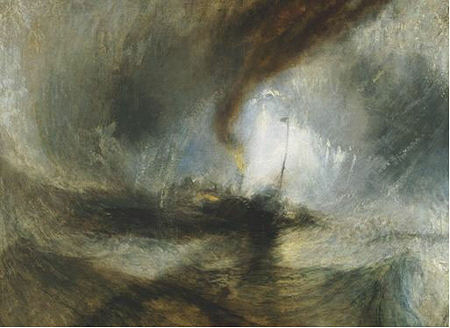
While doing some research for the presentations next week on awe, I came across Edmund Burke's treatise on aesthetics, in which he stated that the sublime and the beautiful were mutually exclusive. Sublime was mentioned quite frequently with awe, so I was curious to do some research on it.
From dictionary.com:
sublime (səˈblaɪm) ![[Click for IPA pronunciation guide]](https://lh3.googleusercontent.com/blogger_img_proxy/AEn0k_vMhMrB1RiqxtzQ5-iVXWkDzu-FGkRwM8ugVmHbwREj_ZUSBeyNA5fFCG1j0pGx4DE4Xl_Dd132SdRmWgXbROU9tw0X8NjgmVcxUNmt8FRTJsnIylbPS2rGwg4sVHu11B6n94n63EA8hPMaN8uerHzF=s0-d) | |
| —adj | |
| 1. | of high moral, aesthetic, intellectual, or spiritual value;noble; exalted |
| 2. | inspiring deep veneration, awe, or uplifting emotion becauseof its beauty, nobility, grandeur, or immensity |
| 3. | unparalleled; supreme: a sublime compliment |
| 4. | poetic of proud bearing or aspect |
| 5. | archaic raised up |
“I know several who admire and love painting, and yet who regard the objects of their admiration in that art with coolness enough in comparison of that warmth with which they are animated by affecting pieces of poetry or rhetoric.”
“It is our ignorance of things that causes all our admiration, and chiefly excites our passions.” Burke “On the Sublime and Beautiful” part 2: 5
“There is something so over-ruling in whatever inspires us with awe, in all things which belongs ever so remotely to terror, that nothing else can stand in their presence.” “On the Sublime and Beautiful” part 4: 24
Burke, Edmund. A Philosophical Enquiry into the Origin of Our Ideas of the Sublime and Beautiful. London: Routledge and Paul, 1958. Print.
Subscribe to:
Comments (Atom)